


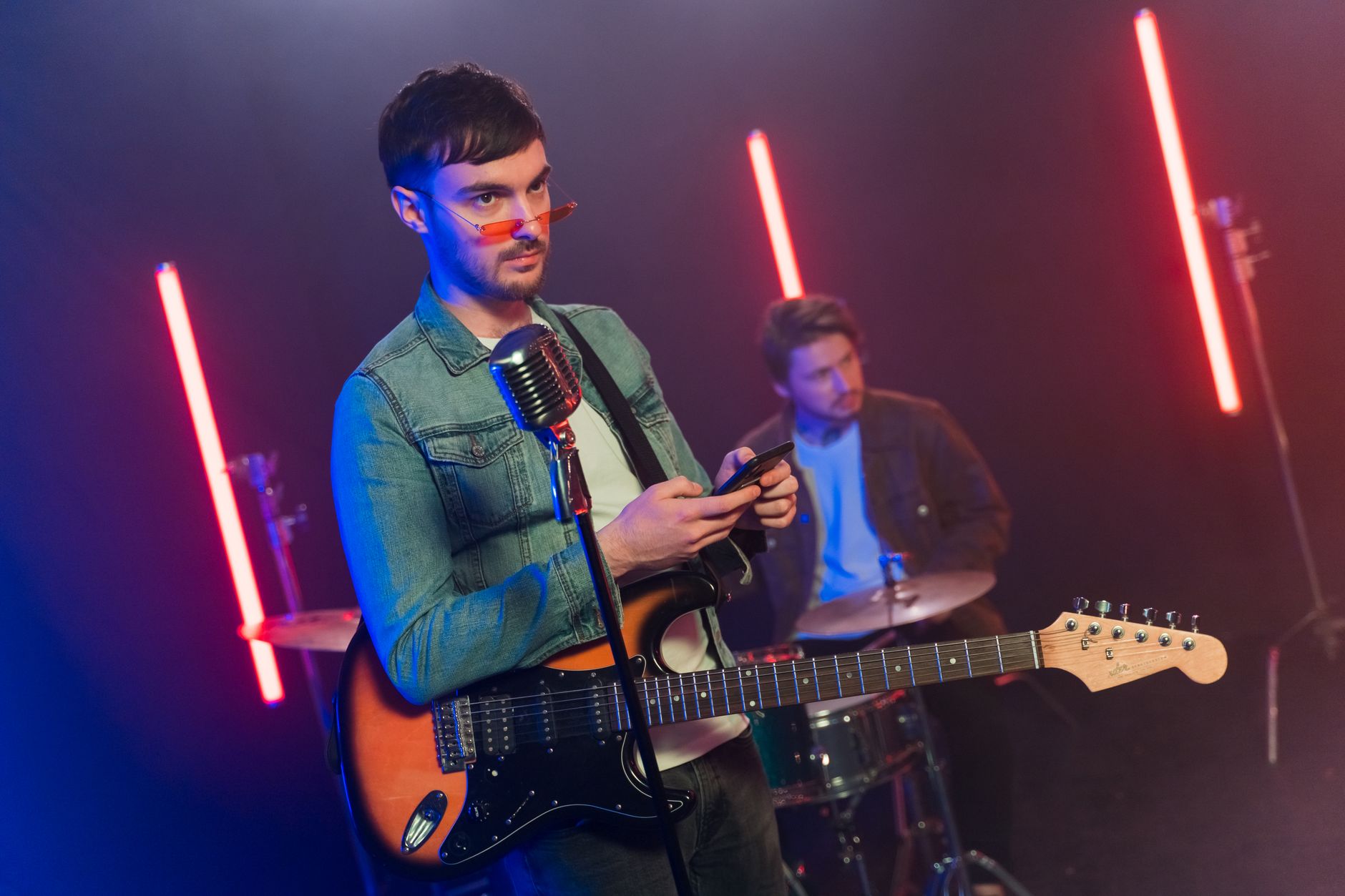
Scenic Movement for an Actor: Why It's Needed and Where to Study
Scenic movement — is a complex of physical skills for an actor, including plasticity, coordination, body control, and the ability to express emotions through movement. This discipline develops bodily expressiveness, helps create convincing characters, and is a mandatory part of professional actor training.
Table of Contents
- What is scenic movement and its role in acting
- Main directions and techniques
- Where to study scenic movement: schools and courses
- Cost of training in 2026
- How scenic movement helps in casting
- Exercises for independent work
- Famous teachers and methodologies
What is Scenic Movement and Its Role in Acting
According to our GetActress platform, scenic movement is in the top-3 skills that casting directors evaluate when selecting actors for roles. We analyzed over 2,800 castings in 2025 and found that 67% of them required good physical fitness and plasticity from actors.
Scenic movement includes:
- Body plasticity — smoothness and expressiveness of movements
- Coordination — the ability to control each part of the body
- Rhythm — a sense of tempo and musicality of movement
- Acrobatics — elements of physical training for complex scenes
- Dance elements — basic skills in various dance styles
- Stage combat — safe execution of fight scenes
One of the casting directors working through our platform notes: *"An actor with good plasticity immediately stands out from the rest. Even if the role doesn't require dancing or acrobatics, body control makes the performance more convincing"*.
Why an actor needs scenic movement
Professional advantages:
- Expanding role range — access to roles requiring physical training
- Increased expressiveness — the ability to convey emotions through the body
- Confidence on set — comfort when working with camera and in space
- Safety — proper movement technique prevents injuries
- Competitive advantage — an additional skill in an actor's resume
Main Directions and Techniques
In Russian theater universities, scenic movement is taught according to several main methodologies. On GetActress, we see that actors with diverse physical training receive 40% more casting invitations.
Classical directions
| Direction | Main Focus | Time to Master | Application |
|---|---|---|---|
| Meyerhold's Biomechanics | Precision and expressiveness of movements | 6-12 months | Theater, art-house cinema |
| Plastic Drama | Creating a character through plasticity | 8-10 months | Dramatic theater |
| Stage Combat | Safe execution of fight scenes | 4-6 months | Cinema, TV series |
| Acrobatics | Physical training and stunts | 12+ months | Circus, action projects |
Contemporary techniques
Contact Improvisation — a direction where actors learn to interact through physical contact. Particularly popular in contemporary theater and independent cinema.
Alexander Technique — a method of working with posture and naturalness of movement. Helps eliminate tension and find organic movement.
Viewpoints — an American technique that develops spatial thinking and the ability to improvise in movement.
Honestly speaking, not all techniques suit every actor. We recommend starting with a basic course and then choosing a specialization depending on your goals and physical abilities.
Where to Study Scenic Movement: Schools and Courses
Theater universities in Moscow
GITIS (Russian Institute of Theater Arts)
- Program: 4 years as part of the acting faculty
- Teachers: Honored Artists of Russia
- Features: Classical school, emphasis on biomechanics
- Admission: Creative competition, high passing score
MHAT School-Studio
- Program: Integrated course with acting mastery
- Methodology: Stanislavski System + contemporary techniques
- Practice: Work in the study theater from the first year
Boris Shchukin Theater Institute
- Strong school of plasticity and scenic movement
- Emphasis on physical theater
- Graduates work in leading Russian theaters
Specialized courses and studios
Center for Plastic Arts (Moscow)
- Courses: From basic to professional level
- Duration: 3-9 months
- Cost: 8,000-15,000 ₽/month
- Teachers: Graduates of GITIS and Shchukin Institute
"Plastika" Studio (St. Petersburg)
- Directions: Biomechanics, contact improvisation
- Format: Group and individual classes
- Cost: 3,000-12,000 ₽/month
"Zhest" Scenic Movement Workshop
- Locations: Moscow, online courses
- Specialization: Contemporary techniques of plastic theater
- Intensives: Offsite seminars and master classes
Online learning
In 2025-2026, online format became more popular. On our platform, actors often ask about distance learning in plasticity. However, this doesn't work for all aspects — partner exercises and stage combat are better studied in person.
Effective online courses:
- "Actor's Plasticity" on Skillbox platform — basic 2-month course
- Master classes from ballet stars — work with posture and grace
- YouTube channels of leading scenic movement teachers
Cost of Training in 2026
We collected current prices for scenic movement training in major Russian cities:
Moscow
| Type of Training | Cost | Duration | What's Included |
|---|---|---|---|
| Group classes | 4,000-8,000 ₽/month | 2-3 times per week | Basic plasticity, rhythm |
| Individual lessons | 2,500-5,000 ₽/lesson | 1.5 hours | Personal program |
| Weekend intensives | 8,000-15,000 ₽ | 2 days | Technique immersion |
| Year-long course | 80,000-150,000 ₽ | 9 months | Full program |
Saint Petersburg
Prices in St. Petersburg are 20-30% lower than Moscow:
- Group classes: 3,000-6,000 ₽/month
- Individual lessons: 1,800-3,500 ₽/lesson
- Intensives: 6,000-12,000 ₽ for weekends
Regional cities
In Yekaterinburg, Novosibirsk, Kazan, prices are 50-60% of Moscow prices. However, the choice of schools and teachers is significantly smaller.
Budget options:
- Classes at cultural centers: from 1,500 ₽/month
- Student theater studios: 2,000-4,000 ₽/month
- Master classes from visiting teachers: 1,000-3,000 ₽/lesson
One of our actors shared: *"I started with budget classes at a local community center, and a year later I was already studying with a teacher from GITIS. The main thing is to start moving in this direction"*.
How Scenic Movement Helps in Casting
Analyzing GetActress data, we noticed an interesting pattern: actors with listed scenic movement skills receive 35% more responses from casting directors.
Types of roles where plasticity is important
Film and TV series:
1. Action and thrillers — 78% of roles require physical training
2. Historical films — need to master the manners of the era
3. Science fiction — often requires creating unusual character plasticity
4. Dramas — emotional expressiveness through the body
Theater productions:
- Contemporary drama — 65% of performances include plastic elements
- Musicals — mandatory requirement
- Experimental theater — the foundation for many productions
What to list in an actor's resume
Specific skills:
- Stage combat (with level indicated)
- Acrobatics (list elements)
- Dance styles
- Work with objects (juggling, fencing)
- Pantomime
- Circus skills
Example of correct description in profile:
*"Scenic movement: Meyerhold's biomechanics (3 years), unarmed stage combat (certificate), basic acrobatics (cartwheels, handstand), contemporary (2 years)"*
There's a nuance here — don't list skills you have only superficial knowledge of. Casting directors may ask you to demonstrate abilities right at the audition.
How to show plasticity in [self-tape](/blog/self-tape-guide)
When recording video auditions at home, you can demonstrate:
- Character's posture and gait
- Characteristic gestures and manners
- Emotional plasticity
- Work in frame (if you have experience)
Exercises for Independent Work
Based on the experience of teachers working with GetActress, we compiled a set of exercises for home training.
Basic warm-up (15-20 minutes)
- Joint warm-up — circular movements from neck to feet
- Spine — wave-like movements, bends
- Breathing exercises — coordination of breathing and movement
- Stretching — main muscle groups
Coordination exercises
"Eights"
- Drawing imaginary eights with different body parts
- Start with arms, move to torso, hips
- Execution time: 5-7 minutes
"Isolation"
- Movement of one body part while others remain still
- Head, shoulders, chest, hips — separately
- Develops body control
Plastic etudes
"Elements"
1. Fire — sharp, jerky movements
2. Water — smooth, flowing
3. Air — light, soaring
4. Earth — heavy, stable
"Animals"
- Depicting the behavior of different animals
- Develops observation and plastic imagination
- Useful for creating character traits
Work with objects
Imaginary objects:
- Ball of different weight and size
- Fabric of various density
- Musical instruments
- Tools and weapons
Real objects:
- Ribbon (2-3 meters)
- Ball or sand bag
- Stick or cane
- Scarf or shawl
Rhythmic exercises
Working with a metronome:
1. Simple steps at different tempos
2. Changing rhythm while moving
3. Polyrhythm — different body parts in different rhythms
Musical improvisation:
- Movement to different music styles
- Conveying melody character through plasticity
- Working with pauses and accents
Famous Teachers and Methodologies
Classical methodologies
Vsevolod Meyerhold — creator of biomechanics, a system of actor training based on precision and expressiveness of movement. His principles are still studied in theater universities.
Etienne Decroux — French mime, founder of modern pantomime. His technique of bodily expression influences actor training worldwide.
Rudolf Laban — movement theorist, creator of a system for analyzing and recording movements. His methods are used in theater, dance, and therapy.
Contemporary Russian teachers
Gennady Abramov — professor at GITIS, author of the "Plastic Education of an Actor" methodology. His students work in leading Russian theaters.
Elena Grigorieva — scenic movement teacher, specialist in Meyerhold's biomechanics. Conducts master classes throughout Russia.
Andrey Drosnin — director and teacher, creator of an author's methodology of plastic training for film actors.
Foreign schools and influences
Jacques Lecoq (France) — his school in Paris trains physical theater actors. The methodology includes work with masks, clowning, pantomime.
Viewpoints (USA) — a technique developed by Anne Bogart and Tina Landau. Develops spatial thinking and the ability for collective creativity.
Suzuki Method (Japan) — a system of physical actor training based on traditional Japanese theater.
According to our platform data, actors who studied several methodologies show greater versatility and receive more diverse roles. However, this requires significant time and financial investment.
Career Prospects and Development
Scenic movement opens additional opportunities in an acting career:
Specializations
Stunt performer — average salary in Moscow 80,000-200,000 ₽/month
- Requires serious physical training
- Continuous learning of new stunts
- High risks, but good pay
Physical theater actor — 40,000-120,000 ₽/month
- Work on experimental projects
- International festivals and tours
- Creative freedom and self-expression
Scenic movement teacher — 50,000-150,000 ₽/month
- Work in theater universities and studios
- Private lessons and master classes
- Stable income and professional growth
Additional opportunities
- Choreographer-director for theater and cinema
- Stunt coordinator on film sets
- Voice actor (plasticity helps with voice work)
- Corporate event host with show elements
As practice shows when working with actors on GetActress, mastery of scenic movement significantly expands professional horizons and increases competitiveness in the market.
---
Scenic movement — is not just an additional skill, but the foundation of an actor's professionalism. Body control, plasticity, and expressiveness of movement make performance more convincing and open access to a wide range of roles. You can start learning with basic courses, gradually deepening into specialized techniques depending on your goals and preferences.
Investment in scenic movement training pays off by expanding your acting range and increasing your chances of getting interesting roles. As our experience at GetActress shows, actors with good plastic training are always in demand in the industry.
Ready to develop your skills and find new roles? Create a free profile on GetActress and get access to current castings where professional actor training is valued.
Ready to start your acting career?
Create a free actor profile in 2 minutes — and casting directors will find you.
Create a free profile →FAQ
Comments
Sign in to join the conversation
Sign inNo comments yet. Be the first to share your thoughts!