


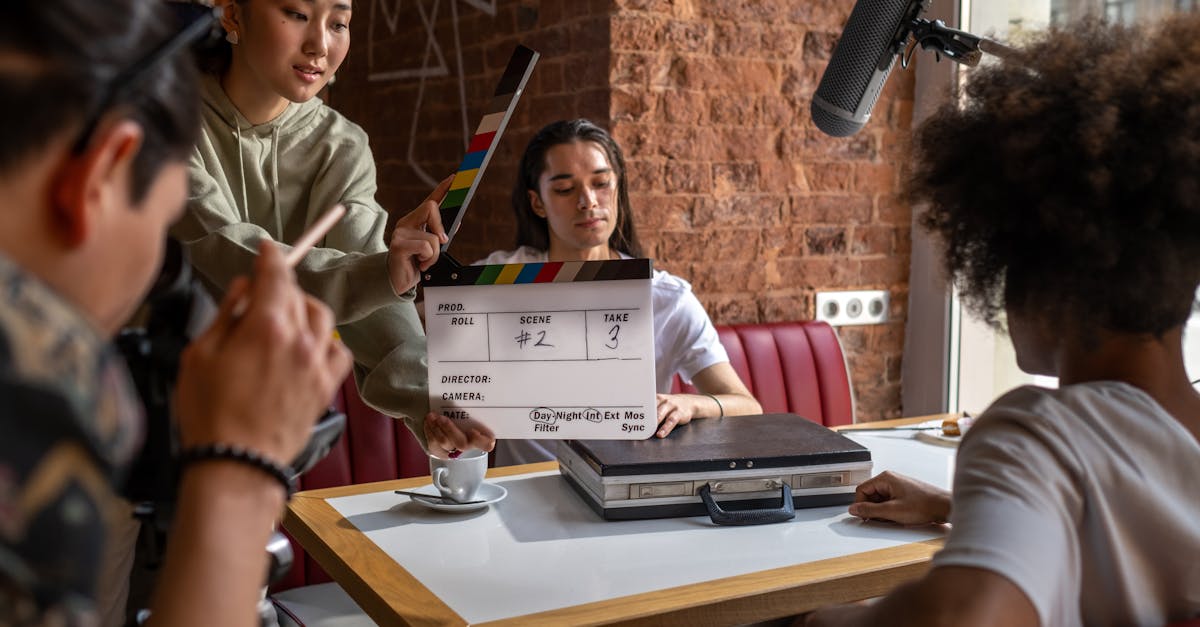
Self-Tape Slate: What to Say and How
A self-tape slate is a brief introduction at the beginning of your audition video where you state your name, the role you're auditioning for, and your representation. This 10-15 second segment serves as your first impression to casting directors and should be delivered professionally with good eye contact and clear speech.
Contents
- What Is a Self-Tape Slate
- Essential Information to Include
- How to Deliver Your Slate Professionally
- Common Slate Mistakes to Avoid
- Slate Variations by Project Type
- Technical Setup for Your Slate
- What Casting Directors Look For
What Is a Self-Tape Slate
The slate functions as your digital introduction to casting directors who may be reviewing hundreds of auditions.
Unlike in-person auditions where you might have small talk before starting, self-tapes require you to establish rapport immediately through your slate. The slate also serves a practical purpose for casting teams who need to quickly identify and organize submissions.
Purpose Beyond Introduction
Your slate helps casting directors:
- Verify your identity against their submission list
- Assess your on-camera presence before the actual performance
- Gauge your professionalism and preparation level
- Check audio and video quality for technical issues
Essential Information to Include
Your slate should contain specific information in a particular order. Here's the exact format we recommend based on industry standards:
Standard Slate Format
- Your full name (as it appears on your headshot and resume)
- The role you're auditioning for
- Your representation (agent, manager, or "self-submitted")
- Additional information if requested in casting instructions
Example Slate Scripts
With representation:
"Hi, I'm Sarah Johnson, auditioning for the role of Emma, submitted by Talent Management Group."
Self-submitted:
"Hi, I'm Michael Chen, auditioning for the role of David, self-submitted."
With specific requirements:
"Hi, I'm Jessica Rodriguez, auditioning for Nurse Williams, submitted by Creative Artists Agency. I'm 5'6" and available for the entire shoot period."
Information to Include When Requested
Some casting notices ask for additional details in your slate:
| Information Type | When to Include | Example |
|---|---|---|
| Height/Physical stats | Commercial, background roles | "I'm 5'8" with brown hair" |
| Availability | Rush productions | "Available all of March" |
| Special skills | Stunt/action roles | "I have motorcycle certification" |
| Location | Multi-city casting | "Based in Atlanta, willing to travel" |
| Age range | When specifically requested | "Playing ages 25-30" |
Honestly, I've seen actors lose opportunities by including unrequested information that made their slate too long. Stick to what's asked for.
How to Deliver Your Slate Professionally
Delivery matters as much as content.
Voice and Tone Guidelines
Speak clearly and at moderate pace - Your slate should be easily understood on first listen. Casting directors often don't rewind to catch missed information.
Use your natural voice - Don't adopt a "character voice" during the slate unless specifically instructed. Save character choices for the actual audition.
Project confidence without arrogance - You want to sound professional and prepared, not overly casual or intimidated.
Eye Contact and Body Language
Look directly into the camera lens - This creates the impression of eye contact with the casting director. Many actors mistakenly look at their phone screen instead of the lens.
Maintain good posture - Sit or stand straight with shoulders back. Your body language should convey professionalism.
Keep facial expressions neutral but pleasant - A slight smile is appropriate, but avoid overly animated expressions during the slate.
Pacing and Rhythm
- Optimal slate length: 8-12 seconds
- Speaking pace: Slightly slower than normal conversation
- Pause after slate: 2-3 seconds before beginning scene work
Practice Techniques
We recommend these methods to perfect your slate delivery:
- Record 10 practice slates and compare them
- Time each version to ensure consistency
- Practice with different lighting conditions to maintain eye contact
- Ask fellow actors for feedback on clarity and professionalism
Common Slate Mistakes to Avoid
Technical Mistakes
Poor audio quality - If casting directors can't understand your name, they may skip your audition entirely. Check our self-tape audio guide for technical solutions.
Looking at the wrong spot - Many actors look at their phone screen instead of the camera lens, breaking the illusion of eye contact.
Inconsistent framing - Your slate and audition should use the same camera setup and framing for continuity.
Content Errors
Including unrequested information - Adding your age, credits, or other details when not asked makes you appear unable to follow directions.
Mispronouncing the character name - This suggests you haven't thoroughly read the script or casting notice.
Forgetting to mention representation - Always include whether you're represented or self-submitted, even if it seems obvious.
Delivery Problems
Speaking too quickly - Rushing through your slate suggests nervousness and makes information harder to process.
Over-rehearsing to the point of sounding robotic - Your slate should sound natural, not like you've practiced it 100 times.
Starting the scene immediately after the slate - Give casting directors a moment to process your introduction.
Personality Missteps
That said, there's a nuance here between being professional and being memorable.
Avoid these personality mistakes:
- Trying to be funny unless auditioning for comedy
- Apologizing for technical issues or nervousness
- Using overly casual language ("Hey guys" instead of "Hi")
- Appearing too serious or intimidating
Slate Variations by Project Type
Different types of productions may require modified slate approaches. Here's what we've observed across various project categories:
Film and Television
Dramatic projects typically want straightforward, professional slates without personality flourishes. Keep your delivery neutral and let your acting speak for itself.
Comedy projects may appreciate a warmer, more personable slate delivery, but avoid trying to be funny during the introduction.
Independent films often have more relaxed requirements, but maintain professionalism since these projects still involve serious industry professionals.
Commercial Auditions
Commercial slates often require additional information:
- Product conflicts ("No current conflicts")
- Physical specifications when relevant to the product
- Special skills if the commercial requires them
Example commercial slate:
"Hi, I'm Amanda Foster, auditioning for the mom role in the Toyota campaign, submitted by Henderson Represents. I'm 5'5", have a valid driver's license, and no automotive conflicts."
Theatre and Live Performance
Even though these are live mediums, many theatre companies now request self-tape prescreening:
- Mention your vocal range if auditioning for musicals
- Include movement/dance experience when relevant
- State your availability for rehearsal periods
Background and Extra Work
Background casting often requires specific physical information:
- Height and weight
- Clothing sizes
- Vehicle information if you have a featured car
- Special looks or wardrobe you can provide
Technical Setup for Your Slate
Your slate should use the same technical setup as your audition to maintain consistency.
Camera Position and Framing
Eye level positioning - Your camera should be at your eye level to create natural eye contact. Avoid looking up or down at the lens.
Medium shot framing - Frame from mid-chest up, allowing casting directors to see your face clearly while including some body language.
Consistent background - Use the same self-tape background for both slate and audition portions.
Lighting Considerations
Even facial lighting - Ensure your face is evenly lit without harsh shadows. Our lighting guide covers specific setup techniques.
Avoid backlighting - Don't position yourself in front of windows or bright lights that create silhouettes.
Test your setup - Record a practice slate to check for any lighting issues before your actual audition.
Audio Requirements
Clear speech capture - Your slate audio should be as clean as your scene work. Poor slate audio suggests technical problems throughout.
Consistent volume levels - Ensure your slate and audition have matching audio levels to avoid jarring transitions.
Minimize background noise - Record in a quiet space, as slate audio issues are often more noticeable than scene work problems.
What Casting Directors Look For
Professional Indicators
Preparation level - A smooth, confident slate suggests the actor has prepared thoroughly for the entire audition.
Technical competence - Good slate quality indicates the actor understands self-tape requirements and likely has good scene work quality.
Direction-following ability - Including exactly what was requested (and nothing extra) shows you can take direction.
Red Flags to Avoid
Excessive nervousness - While some nerves are normal, extreme anxiety during a simple slate raises questions about on-set performance.
Technical incompetence - Poor slate quality suggests the entire submission may have issues.
Unprofessional presentation - Inappropriate clothing, backgrounds, or behavior during the slate indicates potential on-set problems.
What Makes Actors Memorable
Positive memorable qualities:
- Authentic warmth without trying too hard
- Clear communication that's easy to understand
- Appropriate confidence for the project type
- Technical professionalism that shows industry understanding
Industry Perspective
That said, this doesn't mean you should stress excessively about your slate. One experienced casting director noted: "A great slate won't save a poor audition, but a terrible slate can prevent casting directors from seeing a great performance."
The slate serves as your professional calling card in the digital casting world. By following these guidelines and practicing your delivery, you'll create strong first impressions that help casting directors focus on your acting rather than technical or professional concerns.
Remember that consistency across all your self-tape elements - from slate to lighting to audio quality - demonstrates your understanding of industry standards and commitment to professional presentation.
Master your self-tape slate technique and improve your casting success rate. Create your free profile on GetActress to connect with casting directors who appreciate professional, well-prepared submissions.
FAQ
Comments
Sign in to join the conversation
Sign inNo comments yet. Be the first to share your thoughts!