


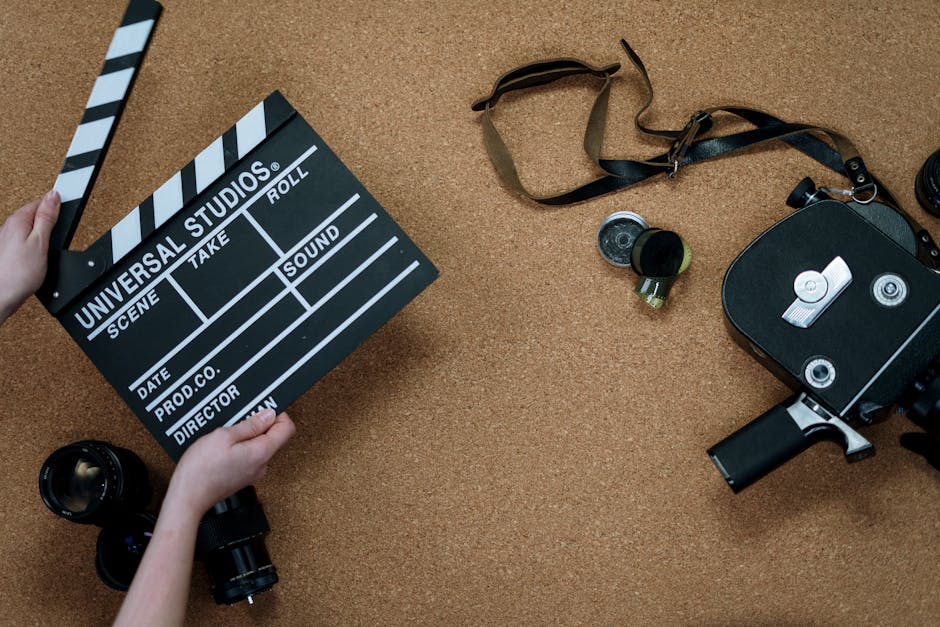
How to Become a Commercial Actor: The Fastest Entry into Film Production
Commercial actor — an performer of roles in television, internet, and radio commercials who promotes goods and services through a character. Commercial shoots are considered the fastest way to enter the acting profession: your first auditions are available within just 2-4 weeks of preparation, and fees start from 15,000 rubles per shooting day.
Why Commercials Are the Best Start for an Actor
Commercial projects have several advantages over film and TV series for aspiring actors. First, experience requirements are minimal — casting directors often look for "fresh faces" without name recognition. Second, shoots happen quickly: usually 1-2 days compared to weeks or months in film.
Commercial fees are paid immediately after shooting, unlike film projects where actors may wait months for payment. Beginners earn 15-25 thousand rubles per day, experienced actors — from 50 thousand, and recognizable faces — from 200 thousand and up.
There are downsides, though. Commercial spots rarely add prestige to your portfolio, and roles are often stereotypical: "happy mother," "successful businessman," "satisfied customer." But for entering the profession, it's an ideal option.
What Types Are Needed in Commercials
Commercial types in advertising are divided into several main categories. "Ordinary people" — the most in-demand group. These are neighbors, colleagues, friends who look natural and inspire viewer trust.
Female types:
- Young mother (25-35 years): caring, energetic, modern
- Business woman (30-45 years): confident, stylish, successful
- Student (18-25 years): active, cheerful, fashionable
- Housewife (35-50 years): practical, family-oriented, economical
- Retiree (55+ years): wise, experienced, kind
Male types:
- Office worker (25-40 years): neat, reliable, ambitious
- Laborer (30-50 years): strong, honest, hardworking
- Student (18-25 years): athletic, goal-oriented, modern
- Family man (30-45 years): responsible, caring, stable
- Retiree (55+ years): wise, authoritative, calm
Actors who can play several related types are especially valued. For example, a girl might fit both a student role and a young mother role, expanding her opportunities.
Skills You Need to Develop
Acting technique in commercials differs from theater or film acting. Here, naturalness matters more than emotional depth. Key skills:
Working with the camera — the key skill for a commercial actor. You need to hold your gaze on the lens, control your facial expressions, work within the limited frame space. Unlike film, where the camera "peeks," in commercials the actor often addresses the viewer directly.
Improvisation is constantly required. Directors often ask to "do the same thing, but happier/more serious/more naturally." An actor must quickly change emotional tone while maintaining believability.
Working with the product — a specific commercial skill. You need to naturally interact with goods: drink yogurt with pleasure, use a smartphone easily and naturally, try on clothes with admiration.
Additional advantages:
- Athletic training for active scenes
- Driving skills for car commercials
- Foreign language proficiency for international brands
- Musical ability for music commercials
- Experience working with children for family spots
Honestly, professional acting education isn't necessary for commercials. Many successful commercial actors came from other fields and learned everything through practice.
Creating a Portfolio for Commercial Auditions
Commercial portfolio is fundamentally different from theater or film portfolios. You don't need complex dramatic scenes — what matters is showing naturalness and commercial appeal.
Essential portfolio elements:
Headshots — professional portrait photographs. You need at least 3-5 shots in different looks: business, casual, family. Photos should be taken within the last 2 years and accurately reflect the actor's appearance.
Demo reel — a 1-2 minute video with your best moments from commercial work. If you have no experience, you can shoot self-tapes — short scenes imitating commercial situations.
Examples of self-tapes for beginners:
1. "Morning coffee" — 30 seconds of naturally enjoying a beverage
2. "Phone call" — a joyful conversation with a friend about a new purchase
3. "Family breakfast" — interaction with an imaginary family
4. "Office break" — a snack during work time
5. "Shopping" — choosing and buying a product
Resume should be as brief as possible: contact info, physical characteristics, experience (if any), special skills. In commercials, theater roles or education don't matter — practical abilities do.
Truth is, creating quality portfolio requires investment. A professional photo shoot costs 15-25 thousand rubles, demo reel shooting — from 20 thousand. But you can start with amateur materials, gradually improving quality.
Finding Auditions and First Auditions
Commercial auditions happen almost daily in major cities. Most announcements are published on specialized platforms, in social media of casting directors and advertising agencies.
Where to find auditions:
Casting platforms — the main source of audition information. Both open auditions for everyone and closed ones — only for experienced actors — are posted here.
Social media of casting directors and production studios. Many specialists run Instagram and Telegram channels where they regularly post new projects.
Advertising agencies sometimes conduct their own auditions. It's useful to track major agency websites: BBDO, Leo Burnett, Publicis, McCann.
How commercial auditions work:
- Application submission — sending photos, video, and questionnaire per audition requirements
- Initial screening — casting director selects suitable candidates
- On-camera test — actor performs a task on camera (5-15 minutes)
- Callback — repeat audition for finalists (not always)
- Selection — final decision made by director or client
Audition assignments are usually simple: read text, show emotion, interact with product. The main thing is naturalness and matching the type.
Important note: 200-500 actors may compete for one role. Rejections are normal, even experienced performers have approval rates of only 5-10%.
Working on Set
Commercial shoots are intense and require maximum concentration from the actor. A typical shooting day lasts 8-12 hours, but an actor may only be involved for 2-4 hours of it.
Stages of a shooting day:
Arrival and preparation (1-2 hours) — meeting the crew, costume fitting, makeup and hair. In commercials, special attention is paid to appearance: every detail must match the concept.
Rehearsals (30-60 minutes) — working through scenes without camera. The director explains tasks, the actor gets used to the space and props.
Shooting takes — main work. Each scene is shot 10-20 times from different angles and with various performance variations. The actor must keep emotions fresh in each take.
Specifics of commercial shoots:
- Speed — time is limited, you need to quickly get into character
- Repetition — the same scene is shot many times
- Technical precision — lots of attention to detail: how to hold the product, where to look
- Improvisation — director may ask to "do it differently"
Payment happens on shooting day or within a week. Additionally, royalties may be paid — a percentage of the commercial's airings, but this applies only to major campaigns.
There's a nuance here: if the commercial becomes very popular, the actor may become recognizable, which limits opportunities to shoot for competing brands.
Building a Career in Commercials
Career growth for a commercial actor happens through accumulating experience and expanding types. Beginning actors usually shoot in regional commercials and internet spots, gradually moving to federal campaigns.
Levels of commercial projects:
| Level | Commercial budget | Actor fee | Examples |
|---|---|---|---|
| Local advertising | 500k - 2M ₽ | 15-30k ₽ | Local stores, services |
| Regional brands | 2-10M ₽ | 30-80k ₽ | Chain stores, banks |
| Federal advertising | 10-50M ₽ | 80-300k ₽ | Major brands, TV commercials |
| International campaigns | 50M+ ₽ | 300k - 2M ₽ | Global brands |
Specialization helps an actor become recognizable in a certain niche. Some actors become "faces" of car brands, others specialize in food products or banking services.
Career development strategies:
Horizontal development — mastering new types and commercial genres. The actor expands their range of roles, learns to work in different styles.
Vertical development — moving from episodic roles to leading ones, from regional to federal commercials.
Diversification — parallel work in film, TV series, voice acting. Many commercial actors use stable income from commercial projects to develop in other areas.
It's important to understand: commercials can be either a springboard for a big career or a main specialization. Some actors earn only from commercials 2-3 million rubles per year.
Financial Side and Prospects
Commercial actor income heavily depends on activity, type, and luck. On average, a beginning actor can expect 3-5 shoots per month with active audition participation.
Real income by experience:
Beginners (0-6 months): 30-80 thousand rubles per month. Mostly shoot in internet commercials and regional projects.
Experienced (1-3 years): 80-200 thousand rubles per month. Access to federal campaigns, repeat invitations from familiar directors.
Professionals (3+ years): 200-500 thousand rubles per month. Work with major brands, ability to choose projects.
Commercial stars: from 500 thousand rubles per month. Recognizable faces, exclusive brand contracts.
Additional income sources:
- Royalties from commercial airings (5-15% of fee monthly)
- Photo shoots for advertising campaigns (20-100k per day)
- Brand event participation (30-150k per appearance)
- Teaching beginning actors (2-5k per lesson)
Truth is, income is unstable. There may be a month with 10 shoots and 300 thousand income, then the next month with no work at all. So it's important to build a financial safety net.
Development prospects from commercials to other fields are quite real. Many famous actors started with commercial projects. First roles of famous Russian actors often included commercial shoots.
Commercials give an actor several important advantages: camera experience, industry understanding, financial stability for developing in other directions. Plus useful connections — many commercial directors also shoot film and TV series.
Beginner Mistakes and How to Avoid Them
Typical beginner mistakes can seriously slow down career development. Let's look at the most common problems and solutions.
Preparation mistakes:
Unsuitable portfolio — the most common problem. Beginners often use artistic photos instead of commercial headshots, or shoot demo reels in art-house style instead of simple commercial scenes.
Inflated expectations about fees and roles. Many expect leading roles in federal commercials from their first auditions, though reality requires gradual growth.
Ignoring your type — trying to play "not your" roles. If an actor looks like a student, it's pointless to audition for businessman or family man roles.
Audition mistakes:
Overacting — excessive theatricality instead of naturalness. In commercials, believability is valued, not acting skill.
Unpreparedness for improvisation. Many casting directors ask to "do the same thing, but differently," and the actor must quickly adapt.
Disrespect for time — lateness, long preparation, arguing with the assignment. The advertising industry works fast, and punctuality and professionalism are valued.
On-set mistakes:
Loss of concentration after several takes. An actor must keep emotions fresh on the 15-20th take as much as on the first.
Arguments with director over creative issues. In commercials, the director executes the client's technical brief, and the actor must understand this.
Carelessness with product — careless handling of the advertised product can ruin an expensive take.
To avoid these mistakes, it's helpful to study successful examples. Look at how celebrities get roles — many principles work in commercials too.
Conclusion
Commercials truly remain the fastest way to enter the acting profession. With proper preparation, your first shoots are possible within a month, and stable income — within six months of active work.
Key steps for successful start: determine your commercial type, create quality portfolio, actively participate in auditions, and constantly develop camera work skills. Remember — in commercials, naturalness matters more than acting skill.
You can start right now: study the market, prepare basic materials, and create a profile on a professional platform. Your first step toward a commercial acting career is just a few clicks away.
Ready to start your acting career?
Create a free actor profile in 2 minutes — and casting directors will find you.
Create a free profile →FAQ
Comments
Sign in to join the conversation
Sign inNo comments yet. Be the first to share your thoughts!