


Film Dubbing: How to Become a Dubbing Actor
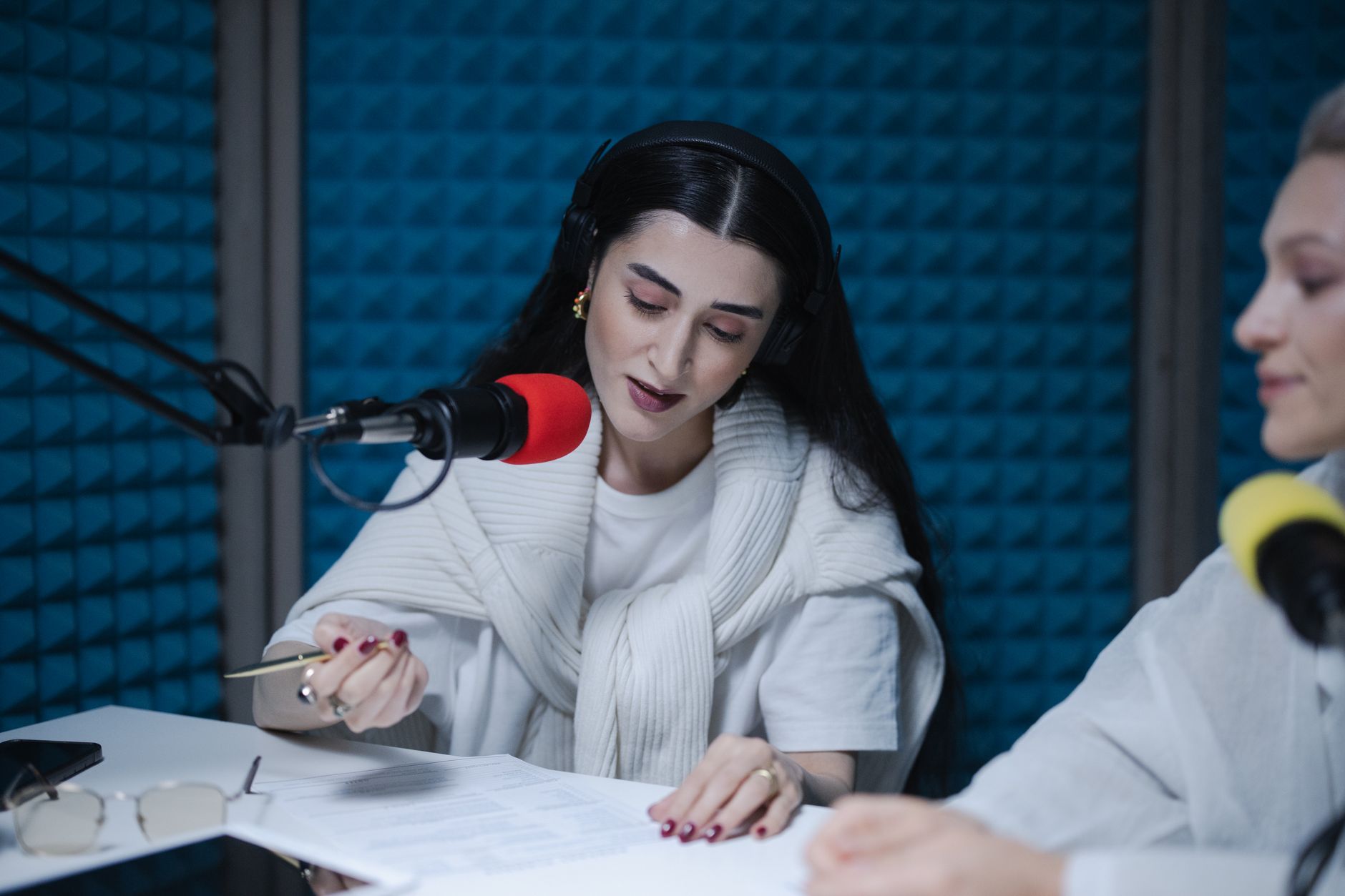
Dubbing actor — is a specialist who voices characters in translated films, TV series, cartoons, and video games. Unlike a regular actor, they work only with their voice, conveying emotions and character through intonation without appearing on screen.
Table of Contents
- What is dubbing and who works in it
- Requirements for a dubbing actor
- How to enter the dubbing industry
- Major dubbing studios in Russia
- Voice preparation and speech technique
- Creating a dubbing demo reel
- Fees in the dubbing industry
- Career path of a dubbing actor
What is dubbing and who works in it
Dubbing — is the process of replacing the original soundtrack of a film with a translation, where actors speak synchronously with the lip movements of characters on screen. In Russia, almost all foreign films are dubbed for theatrical release and most TV series are dubbed for television.
The dubbing team includes:
- Dubbing actors — voice the characters
- Dubbing director — supervises the recording process
- Sound engineer — responsible for technical quality
- Translator-adapter — adapts the text for lip-sync
- Synchronizer — synchronizes text with video
The peculiarity of the profession is that the actor must not just voice the text, but match the rhythm of speech of the original character and convey their emotional state.
Requirements for a dubbing actor
Voice characteristics
Timbre and vocal range — the main tools of a dubbing actor. Studios look for different types of voices:
- Low male voices for leader characters
- High female voices for young heroines
- Characteristic voices for villains and comedic characters
- Child voices for animation
Technical skills
- Lip-sync — the ability to synchronize speech with lip movement on screen
- Cold reading — quick mastery of unfamiliar text
- Emotional flexibility — switching between different character states
- Voice endurance — recording sessions last 3-4 hours
Professional training
Although specialized education is not required, the following are useful:
- Acting education (theater university)
- Stage speech courses
- Dubbing technique training
- Vocal training for breathing development
However, many successful dubbing actors came to the profession without theater education, but with good natural abilities.
How to enter the dubbing industry
Step 1: Assess your voice characteristics
Record yourself on a voice recorder, reading different texts:
- A news bulletin (neutral delivery)
- A drama excerpt (emotional text)
- A children's rhyme (light delivery)
- An advertising text (selling intonation)
Listen to the recordings after a few days. If your voice sounds pleasant and varied — you have potential.
Step 2: Study the work of professionals
Watch dubbed films and analyze:
- How actors convey emotions through voice
- How they achieve lip-sync
- What techniques they use for different character types
Pay attention to the work of Vsevolod Kuznetsov, Larisa Brokhman, Alexander Novikov — recognized masters of Russian dubbing.
Step 3: Complete basic training
Dubbing schools and courses:
- Nevafilm studio conducts master classes
- Dubbing school at Mosfilm
- Private courses from practicing actors
- Online courses on speech technique
Basic course duration — 2-3 months, cost from 15,000 to 50,000 rubles.
Step 4: Create a demo reel
Record samples of your work lasting 2-3 minutes, including:
- Dubbing a dramatic scene
- A comedy episode
- A commercial
- A child character (if your voice suits)
Step 5: Find your first projects
Start with low-budget projects:
- Voice-over for YouTube channels
- Dubbing independent films
- Work at small studios
- Participation in amateur projects for experience
Major dubbing studios in Russia
Federal studios
| Studio | Specialization | Notable projects |
|---|---|---|
| Nevafilm | Blockbusters, TV series | Marvel, Disney, HBO |
| Pythagoras | Animation, family films | Pixar, DreamWorks |
| SV-Dubl | Art house, dramas | Cannes award winners |
| Mosfilm-Master | Classics, retro | Restored films |
Regional studios
- "Cinema US" (Yekaterinburg) — TV series for TNT
- "Dolya" (Saint Petersburg) — independent cinema
- "Zvuk-M" (Novosibirsk) — documentary films
Tip: start with regional studios — it's easier to get a casting audition and gain first experience.
Voice preparation and speech technique
Breathing exercises
Diaphragmatic breathing — the foundation of voice endurance:
1. Lie on your back, place your hand on your stomach
2. Inhale so your stomach rises, not your chest
3. Exhale slowly through your mouth
4. Repeat for 10-15 minutes daily
Articulation exercises
Exercises for clear diction:
- "Fence" — wide smile with closed teeth (10 seconds)
- "Tube" — protruding lips (10 seconds)
- "Horse" — tongue clicking (20 times)
- "Swing" — tongue up and down behind teeth (20 times)
Voice exercises
- Warm-ups — singing vowels at different pitches
- Tongue twisters — for developing speech apparatus mobility
- Reading aloud — 30 minutes daily in different voices
- Imitation — copying voices of famous actors
Important: don't overload your voice. If hoarseness or fatigue appears, take a break.
Creating a dubbing demo reel
Demo reel structure
Optimal duration — 90-120 seconds. Include:
- Introduction (5-10 seconds)
- Dramatic episode (30 seconds)
- Comedy scene (20-30 seconds)
- Advertising text (15-20 seconds)
- Character voice (15-20 seconds)
Technical requirements
- Format: MP3 or WAV
- Quality: 44.1 kHz, 16 bit minimum
- Recording: in a quiet room without echo
- Processing: minimal — only volume normalization
To be honest, your first demo rarely turns out perfect. Be prepared to re-record it several times after getting feedback from professionals.
Fees in the dubbing industry
Payment system
In dubbing, payment is for lines or duration:
Per line:
- Beginning actor: 50-150 rubles
- Experienced actor: 200-500 rubles
- Dubbing star: 800-2000 rubles
Per minute of sound:
- Beginner: 500-1000 rubles
- Professional: 1500-3000 rubles
- Top actor: 4000-8000 rubles
Factors affecting fees
- Project budget — blockbusters pay more than independent films
- Role size — main characters get higher rates
- Actor experience — portfolio directly affects price
- Urgency — work "yesterday" gets 50-100% surcharge
- Exclusivity — studio regular actors receive bonuses
Average monthly income:
- Beginning actor: 20,000-50,000 rubles
- Experienced professional: 80,000-200,000 rubles
- Top actor: 300,000-800,000 rubles
However, achieving stable workload in dubbing is difficult — work comes in projects.
Career path of a dubbing actor
Career development stages
1. Trainee (0-1 year)
- Small roles, extras
- Work for symbolic pay
- Learning studio processes
- Building contacts
2. Supporting actor (1-3 years)
- Episodic characters
- Stable income 30-70 thousand
- Specialization in certain role types
- Work with 2-3 studios
3. Professional actor (3-7 years)
- Main and supporting roles
- Income 100-250 thousand rubles
- Recognition in professional circles
- Ability to choose projects
4. Dubbing star (7+ years)
- Assigned to specific foreign actors
- Income from 300 thousand rubles
- Participation in prestigious projects
- Possibility of directing dubbing
Additional development directions
- Dubbing direction — supervising the voice-over process
- Sound engineering — technical side of recording
- Teaching — conducting courses and master classes
- Adaptation — working with translation texts
- Producing — organizing dubbing projects
Many dubbing actors also work in advertising and voice-over, which provides additional income.
Building a professional network
Networking in dubbing is critical:
- Attend professional events
- Maintain relationships with directors
- Communicate with fellow actors
- Follow industry news
- Register on casting platforms
Here's the thing: reputation is very important in dubbing. One failure or conflict can close doors for years.
Conclusion
Dubbing is a specific niche of acting that requires special skills and continuous development. Success depends on natural voice characteristics, technical training, and the ability to work as part of a team. Start small, develop your skills gradually, and don't be afraid to experiment with different character types.
Ready to start a career in dubbing? Create a free profile on GetActress and receive notifications about casting calls for voice-over and dubbing work.
Ready to start your acting career?
Create a free actor profile in 2 minutes — and casting directors will find you.
Create a free profile →FAQ
Comments
Sign in to join the conversation
Sign inNo comments yet. Be the first to share your thoughts!